Varanasi, also called Kashi or Banaras, is a city on the Ganges in Uttar Pradesh and one of the oldest continuously inhabited cities in the world. It is Hinduism's holiest city, with more than 80 ghats (stone steps) running down to the river, and lies 13 km from Sarnath, where the Buddha gave his first sermon. Varanasi is about 800 km east of Delhi, a 1.5-hour flight, so it is usually added to a Golden Triangle tour as a two-night extension at the start of the journey.
The city on the river
Nothing on the Golden Triangle prepares you for Varanasi. The Mughal cities are about monuments. Varanasi is about ritual, and it is performed in the open, every day, on the steps down to the Ganges. Pilgrims bathe at first light, priests chant, and the evening aarti fills the riverfront with fire, bells and song.
We see it the way it is meant to be seen: from the water. An evening boat brings you to the Ganga aarti at Dashashwamedh Ghat, and a dawn boat the next morning follows the ghats as the city wakes. Between the two, your guide walks you through the old-city lanes, which are too narrow for any car, past shrines, lassi shops and the looms where Banarasi silk is still woven by hand.
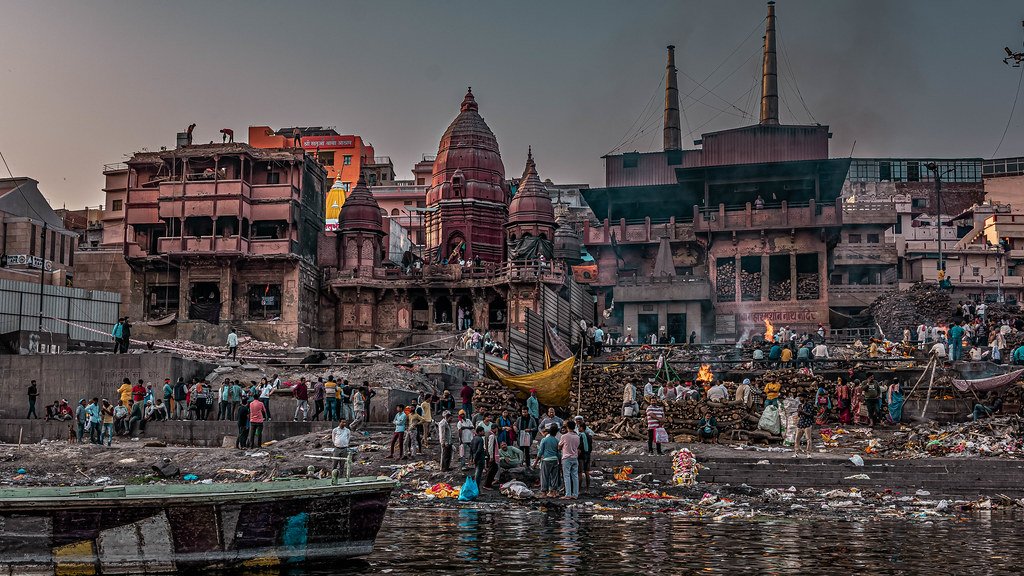
Varanasi can be intense, and that is part of its power. A licensed local guide explains what you are seeing, including the cremation ghats, which are treated with respect and never photographed. A quiet half-day at Sarnath balances the experience before you fly on to the Mughal cities.
Places to visit
What to see in Varanasi
Evening ritual
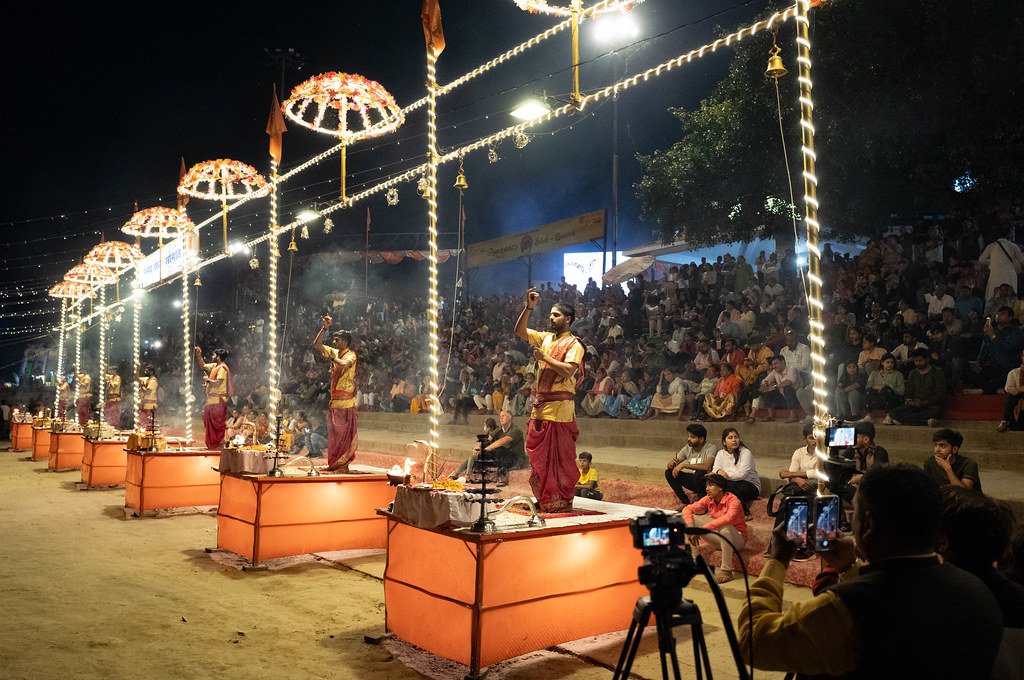
Ganga aarti at Dashashwamedh Ghat
The nightly fire ceremony to the river, performed by young priests with brass lamps, conch shells and chanting. Best watched from a private boat, which puts you in front of the crowds on the steps.
At first light
Dawn boat on the Ganges
An hour on the river as the sun comes up behind the far bank, passing bathers, washermen, temples and old palaces along the ghats. For most travellers, this is the moment they remember.
Sacred site
Kashi Vishwanath Temple
The golden-spired temple to Shiva at the spiritual centre of the city, now reached through a wide new corridor from the river. Security is strict and phones are not allowed inside, so your guide will plan the visit.
Buddhist heritage
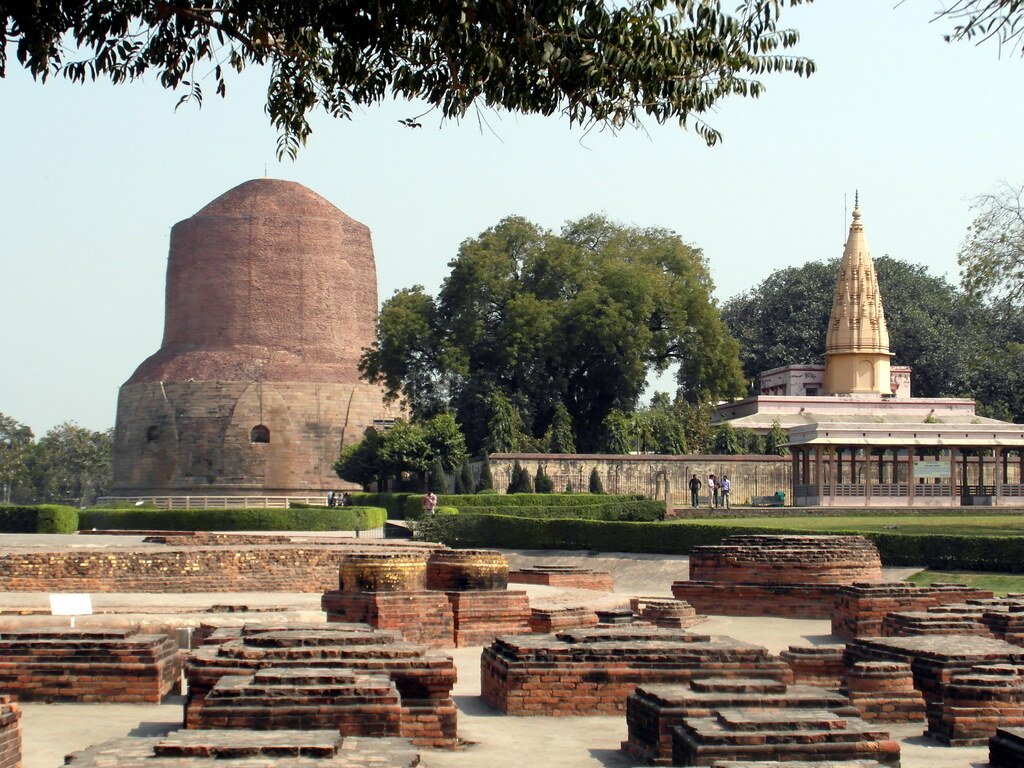
Sarnath
The deer park where the Buddha gave his first sermon, 13 km from the city. The Dhamek Stupa, the monastery ruins and the museum's Ashoka lion capital, India's national emblem, make a calm half-day.
Old city
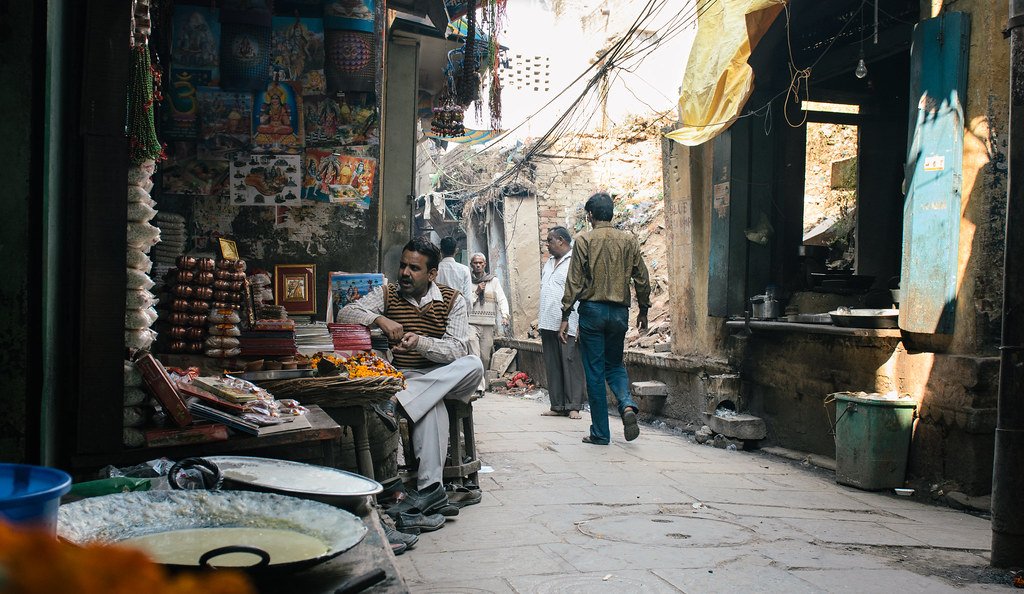
The lanes of Varanasi
A maze of alleys behind the ghats, full of tiny shrines, sweet shops and wandering cows. Explored on foot with a guide, often with a stop for kachori and a clay cup of lassi.
Living craft
Banarasi silk weavers
Visit a family workshop where silk and gold-thread brocade saris are still woven on hand looms, sometimes over several weeks. We take you to working weavers, not commission showrooms.
Gallery
Varanasi in pictures
Good to know
Essential visitor tips
When to visit
October to March is the most comfortable time. Dev Deepawali, at the November full moon, lights every ghat with lamps. Winter mornings can be foggy, so we keep a little slack around flights.
How long to stay
Two nights gives you an evening aarti, a dawn boat, the old city and Sarnath without rushing. With one night you lose either the dawn or Sarnath.
Respect the ghats
Manikarnika and Harishchandra are cremation ghats. Watch quietly and never photograph them. Dress modestly, and remove your shoes where the locals do.
Getting around
Cars can't enter the old city. Your chauffeur drops you at the edge, and from there it's on foot, by boat or by cycle-rickshaw, with your guide beside you.
Questions
Varanasi — your questions answered
Is Varanasi worth adding to a Golden Triangle tour?
Yes, if you want to see living religious India alongside the Mughal monuments. Varanasi's ghats, the evening Ganga aarti and the dawn boat on the Ganges are unlike anything in Delhi, Agra or Jaipur. It adds two nights and a short flight, which is why the 9-day Golden Triangle with Varanasi is one of our most popular routes.
How do you get from Delhi to Varanasi?
The quickest way is a direct flight, about 1 hour 20 minutes, with several departures a day. There are also overnight trains of around 10–13 hours. On our private tours you are met at Varanasi airport by your driver and guide.
How many days do you need in Varanasi?
Two nights is ideal. It allows an evening Ganga aarti, a sunrise boat on the Ganges, a walk through the old city and a half-day at Sarnath. One night is possible but rushed.
What is the Ganga aarti?
The Ganga aarti is a Hindu fire ritual offered to the river every evening at Dashashwamedh Ghat. Priests move large brass lamps in unison to chanting, bells and conch shells. It begins around sunset, and it is best watched from a boat on the river.
Written by the Golden Triangle Journeys team · Private, chauffeured North India specialists · Last updated September 2026.