Hilltop Fort
Amber Fort
The sixteenth-century fort-palace above Maota Lake — sandstone and marble courtyards, the mirrored Sheesh Mahal, and long ramp walls that glow at first light. Arrive before 9am, ahead of the tour coaches.
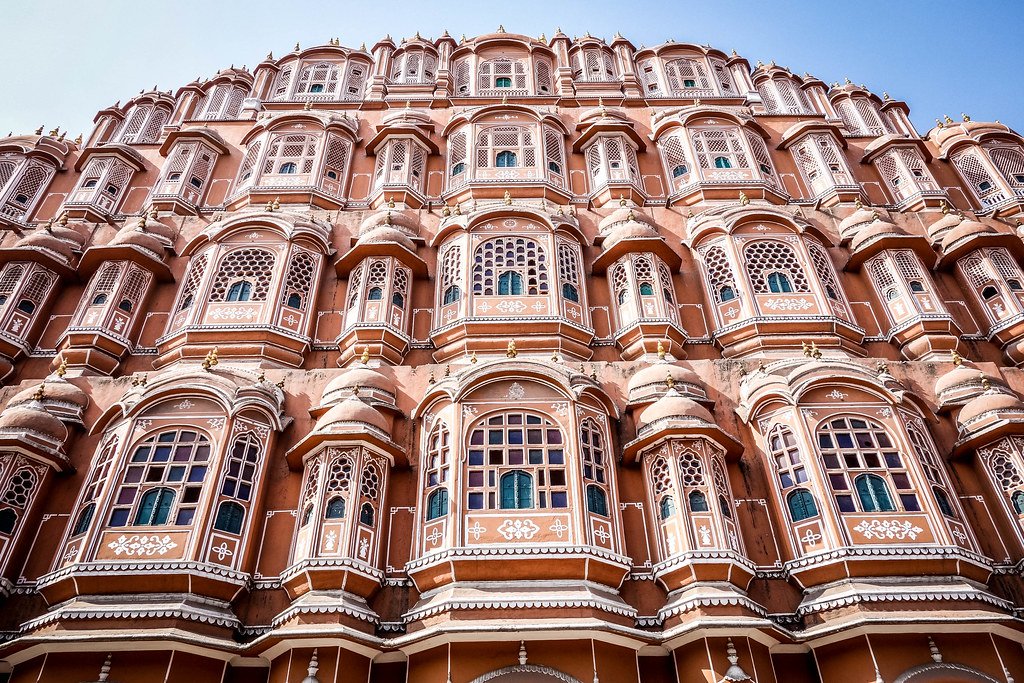
The Pink City — hilltop forts, painted palaces and craft bazaars, and the gateway from the Golden Triangle into Rajasthan. India's most photogenic city, seen at your own pace.
Jaipur is the capital of Rajasthan and the third point of the Golden Triangle, about 240 km from Agra (a 4–4.5 hour drive via Fatehpur Sikri) and 280 km from Delhi. Founded in 1727 and painted terracotta pink in 1876, its walled old city is a UNESCO World Heritage Site and home to the Amber Fort, City Palace, Hawa Mahal and the Jantar Mantar observatory. Most travellers spend one to two nights, often to close a Golden Triangle tour or begin a longer Rajasthan journey.
Jaipur was laid out in 1727 by the astronomer-king Sawai Jai Singh II as one of India's first planned cities — a grid of nine rectangular sectors, wide bazaar streets and a walled palace quarter at its heart. That order is still legible today, which makes it one of the most rewarding cities in India to explore slowly.
The set pieces are extraordinary. The hilltop Amber Fort rises above its own lake, its mirrored halls glinting in the morning; the City Palace is still the working home of the royal family; the Hawa Mahal screens the street below through 953 latticed windows; and the Jantar Mantar holds the world's largest stone sundial. Between them run the bazaars — block-printed textiles, blue pottery, silver and gemstones, the crafts for which Jaipur is famous the world over.
On a private journey we arrive at Amber before the coaches, watch the Pink City turn amber from Nahargarh at sunset, and leave the bazaars unhurried and at your own pace. And because Jaipur is the doorway west, your guide can carry the same journey on into Rajasthan — to the lakes of Udaipur, the blue city of Jodhpur, or the tigers of Ranthambore.
The sixteenth-century fort-palace above Maota Lake — sandstone and marble courtyards, the mirrored Sheesh Mahal, and long ramp walls that glow at first light. Arrive before 9am, ahead of the tour coaches.
A vast palace complex at the heart of the old city, still part-home to the Maharaja. Its courtyards hold outstanding collections of textiles, arms and royal regalia — best understood with a guide.
The five-storey 'Palace of Winds' — a honeycomb screen of 953 windows through which the women of the court watched the street unseen. Best photographed from a rooftop café directly opposite, early.
Jai Singh's eighteenth-century observatory: nineteen monumental instruments for tracking time and the heavens, including the world's largest stone sundial, accurate to two seconds. Far more compelling than it sounds.
The fort on the ridge above the city, best at sunset when the Pink City turns amber and the Aravalli hills go blue. Fewer crowds than Amber, and the finest panorama in Jaipur.
The three-century-old jewellery market and the surrounding walled bazaars — silver, lac bangles, gemstones and block-printed cloth. Best in the early morning, when the lanes are waking rather than selling.
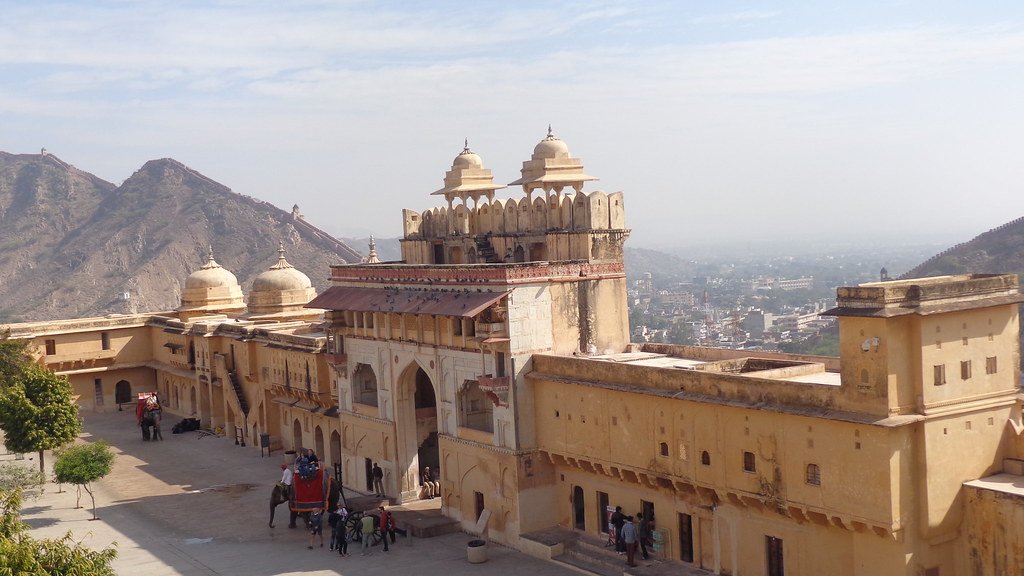
Reach Amber Fort before 9am for directional light and quiet courtyards. We time your morning so the fort comes before the day's crowds and heat.
October to March for cool, clear days. Summer is hot; the monsoon (July–September) brings green hills and lower prices. Golden hour on the ridge forts is the city at its best.
Jaipur is a serious craft city — block-printing in Sanganer, blue pottery, gem-cutting. Your guide can take you to working ateliers rather than commission showrooms.
Jaipur is where the Triangle opens west. Udaipur, Jodhpur and Jaisalmer lie beyond, and Ranthambore's tiger park is about three hours south — easy to fold into a longer private journey.
Every journey is private and chauffeured, with licensed local guides and hand-picked hotels. Prices are bespoke — tell us your dates and we'll shape a plan and a clear quote.
 Classic3 Days
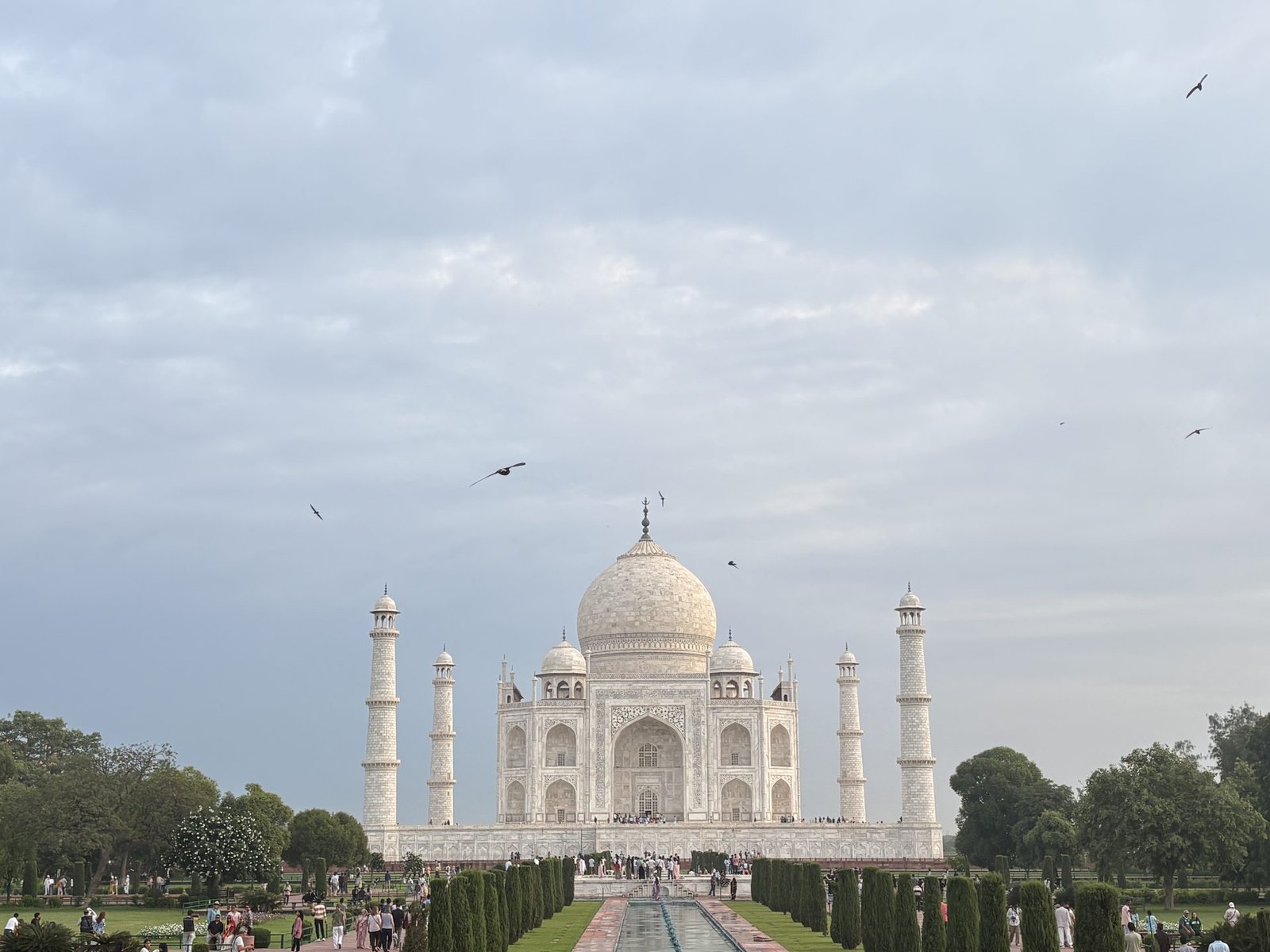
The shortest way to see the Golden Triangle — Delhi, Agra and Jaipur in three private, well-paced days, with the Taj Mahal at its heart.
Classic4 DaysThe classic Golden Triangle in four unhurried days — Delhi, the Taj Mahal at Agra, and the palaces of Jaipur, entirely private.
Most Popular5 DaysFive days across Delhi, Agra and Jaipur — the Golden Triangle at a comfortable pace, with a full day in each city and the Taj at dawn.
Jaipur's old city was painted terracotta pink in 1876 to welcome the Prince of Wales, and the walled quarter has kept the colour ever since. The warm, dusty rose of the City Palace, Hawa Mahal and the bazaar façades is why Jaipur is known worldwide as the Pink City.
Yes. Jaipur completes the Golden Triangle with its royal palaces, the hilltop Amber Fort and some of India's finest craft bazaars. It is also the gateway to Rajasthan, so it works both as the close of a classic tour and as the start of a longer journey west.
One to two days covers Jaipur well. A single day takes in the Amber Fort and the old-city palaces; a second day leaves time for the bazaars, a craft workshop, or a step-well and garden at the city's edge.
Jaipur is about 240 km from Agra — a four-to-four-and-a-half-hour drive, usually broken at Fatehpur Sikri — and around 280 km, or five to six hours, from Delhi. On our private tours your chauffeur drives the whole route, with stops timed to the day.
Tell us your dates and we'll shape your Pink City days — Amber before the crowds, the old-city palaces, the bazaars at your own pace — and carry the journey on into Rajasthan if you wish.