Hill fort
Mehrangarh Fort
One of the largest and best-preserved forts in India, with seven gates, carved sandstone palaces and one of Rajasthan's finest museums. The audio guide is excellent, and a human guide is better.
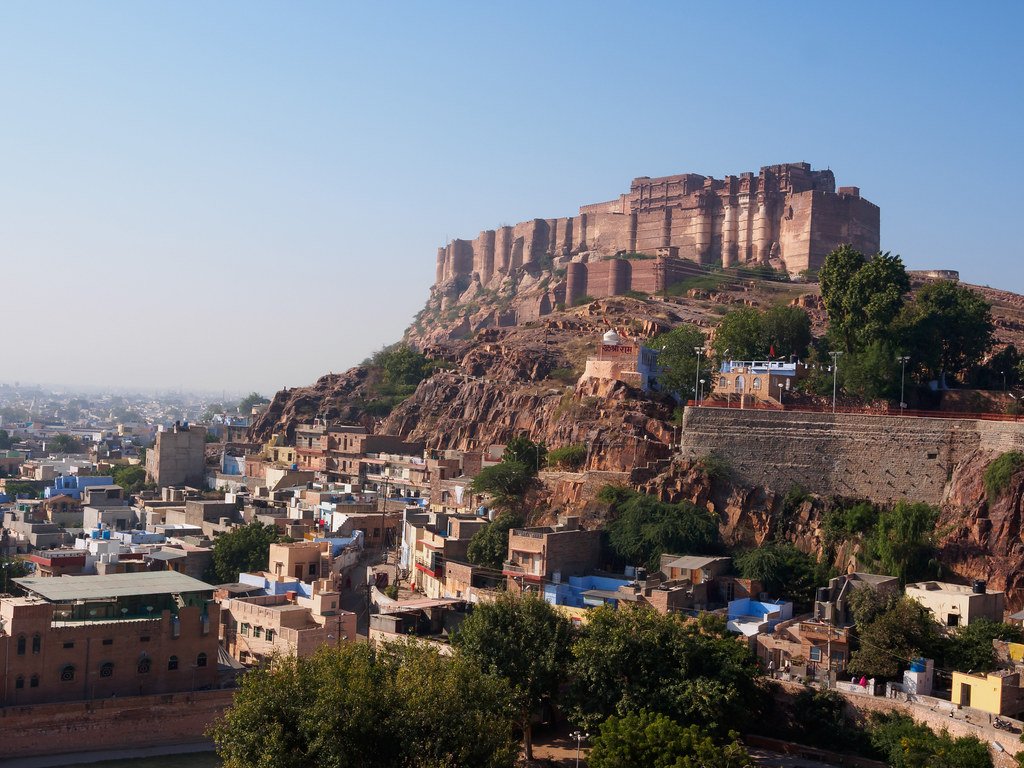
The Blue City: one of India's mightiest forts rising from the rock above a maze of indigo lanes, on the edge of the Thar Desert.
Jodhpur is Rajasthan's second-largest city, founded in 1459 by Rao Jodha of the Rathore clan at the edge of the Thar Desert. It is known as the Blue City for the indigo-washed houses of its old town, which lie beneath Mehrangarh, one of the largest forts in India. Jodhpur is about 340 km from Jaipur (5–6 hours), 250 km from Udaipur and 285 km from Jaisalmer. Most travellers spend one to two nights here on a longer Rajasthan journey.
Few sights in India match your first view of Mehrangarh. Its walls rise sheer from a rocky outcrop 120 metres above the city, and below them the old town spreads out in a thousand shades of blue. Rudyard Kipling reportedly called it the work of giants, and inside, the palaces are as delicate as the walls are massive.
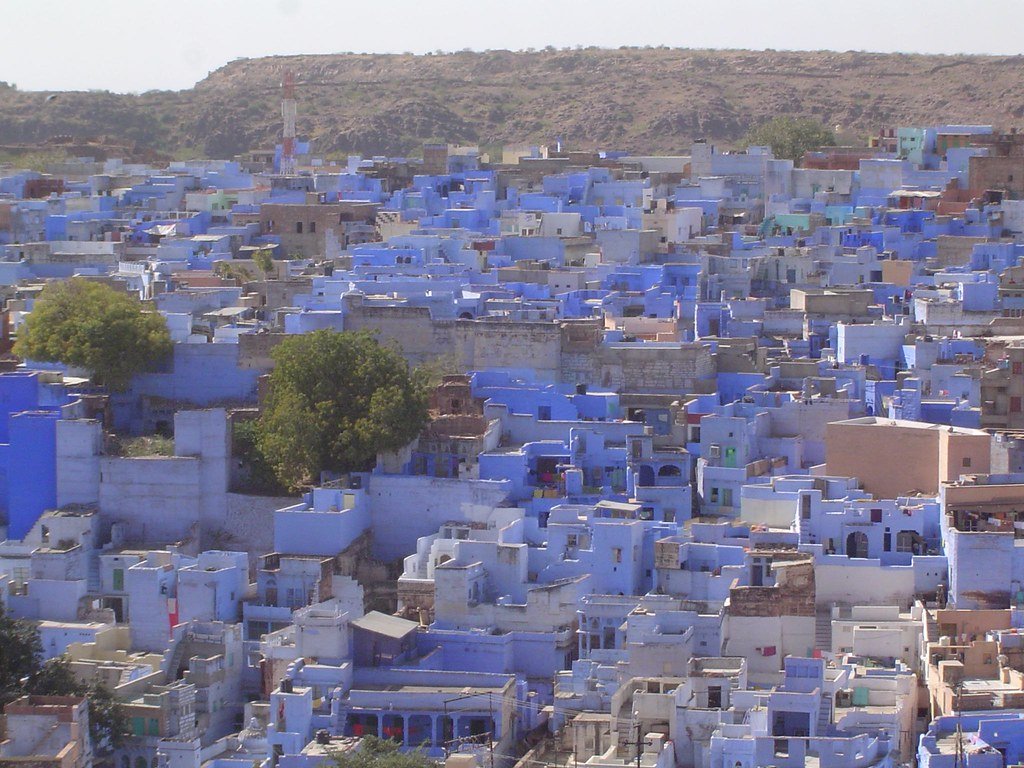
We start at the fort in the morning, when the light is on the walls and the museum's galleries are quiet. Then your guide leads you down through the blue lanes of Brahmpuri, where the colour is thought to have marked Brahmin homes and to keep houses cool, to the Clock Tower and Sardar Market, which is full of spices, textiles and silver.
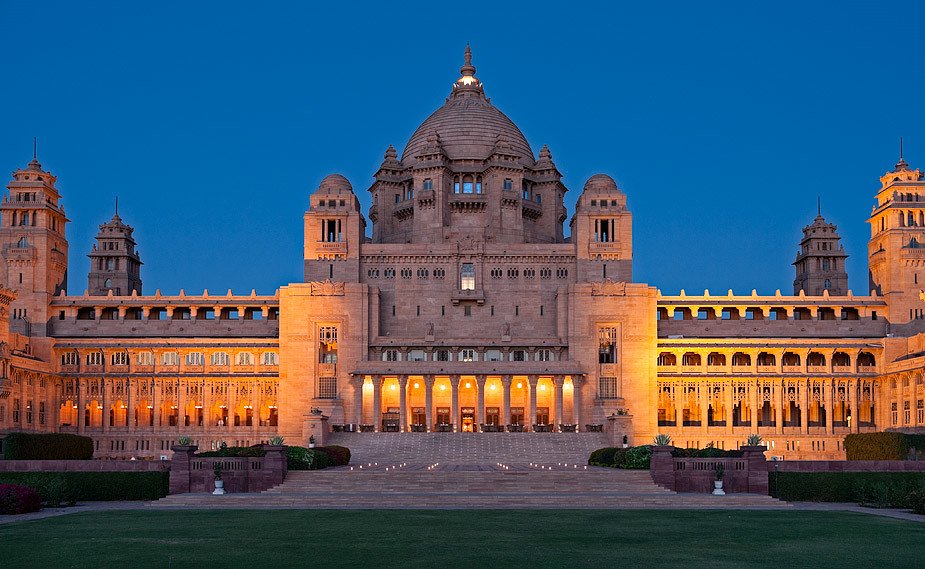
Jodhpur is a small city, and it is best enjoyed slowly. There is the marble cenotaph of Jaswant Thada in the late afternoon, and the Art Deco Umaid Bhawan Palace, still part-home to the royal family. In the evening, dinner on a rooftop looks across at the fort as it lights up.
One of the largest and best-preserved forts in India, with seven gates, carved sandstone palaces and one of Rajasthan's finest museums. The audio guide is excellent, and a human guide is better.
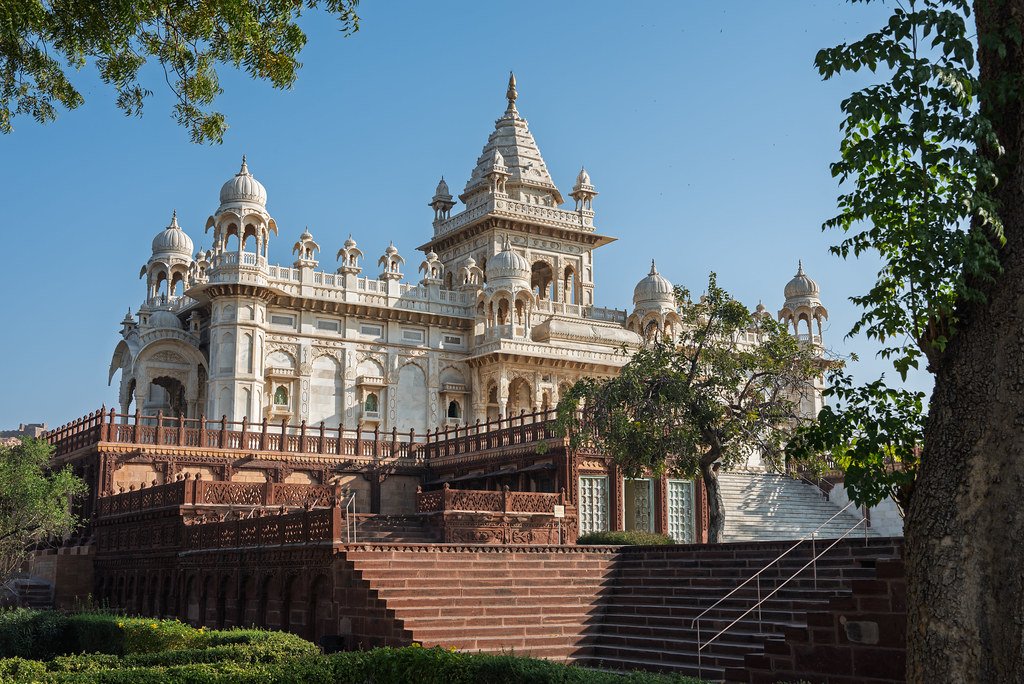
A white marble cenotaph built in 1899 for Maharaja Jaswant Singh II. It has thin marble panels that glow in the sun, and a view back to the fort across a small lake. Loveliest in the late afternoon.
One of the world's largest private residences, completed in 1943 in golden sandstone. It is part royal home, part hotel and part museum, and a striking Art Deco contrast to the medieval fort.
The indigo-washed houses of the old town below the fort, explored on foot with your guide. It is a quiet world of doorways, shrines, rooftops and daily life, and the best place to see why Jodhpur is the Blue City.
The busy market square around the Ghanta Ghar clock tower, with spices, bandhani tie-dye, silver and leather. Try a famous omelette or a makhaniya lassi on the way.
A beautifully restored eighteenth-century stepwell in the old city. Its carved sandstone steps drop deep to the water, and it is surrounded by cafés and craft shops.
October to March for warm, dry days and cool evenings. Jodhpur is on the edge of the desert, so April to June is very hot. The Rajasthan International Folk Festival is held at Mehrangarh in October.
One night covers Mehrangarh, the blue lanes and Jaswant Thada. Two nights leaves time for Umaid Bhawan, a village safari, or simply a slower pace.
Visit Mehrangarh at opening time, before the heat and the coaches, then walk down through the blue city to the market. It is the natural route, and it is downhill.
Jodhpur links Jaipur with Udaipur (via Ranakpur) and with Jaisalmer and the desert, so it is often a natural midpoint on a longer Rajasthan journey.
Every journey is private and chauffeured, with licensed local guides and hand-picked hotels. Prices are bespoke — tell us your dates and we'll shape a plan and a clear quote.
Rajasthan10 DaysThe Golden Triangle deepened into Rajasthan — Delhi, Agra and Jaipur, then the blue city of Jodhpur and the lakes of Udaipur.
 Wildlife12 Days
A fuller Rajasthan — the Golden Triangle with tiger safaris at Ranthambore, then Jodhpur and Udaipur.
Cultural13 DaysRajasthan with the Ganges — Varanasi, the Golden Triangle, and the desert cities of Jodhpur and Udaipur.
Many houses in Jodhpur's old city are painted in shades of indigo blue. The tradition is often linked to Brahmin households, and the colour is also said to keep homes cool in the desert heat. It is best seen from the walls of Mehrangarh Fort.
Yes. Mehrangarh is one of the most spectacular forts in India, and the blue old city, the bazaars and Umaid Bhawan Palace make Jodhpur one of Rajasthan's highlights. It fits naturally between Jaipur and Udaipur, or on the way to Jaisalmer.
One to two nights. A single full day covers Mehrangarh Fort, Jaswant Thada, the blue lanes and the Clock Tower market. A second night gives time for Umaid Bhawan Palace and a slower pace.
Jodhpur is about 340 km from Jaipur (5–6 hours by road), 250 km from Udaipur (about 5 hours via the Ranakpur temples) and 285 km from Jaisalmer (about 5 hours). On our private tours your chauffeur drives every leg, with stops along the way.
Tell us your dates and we'll shape your Jodhpur days, with Mehrangarh at opening time, the blue lanes on foot and a rooftop dinner facing the fort, as part of a private journey through Rajasthan.