UNESCO World Heritage
Jaisalmer Fort
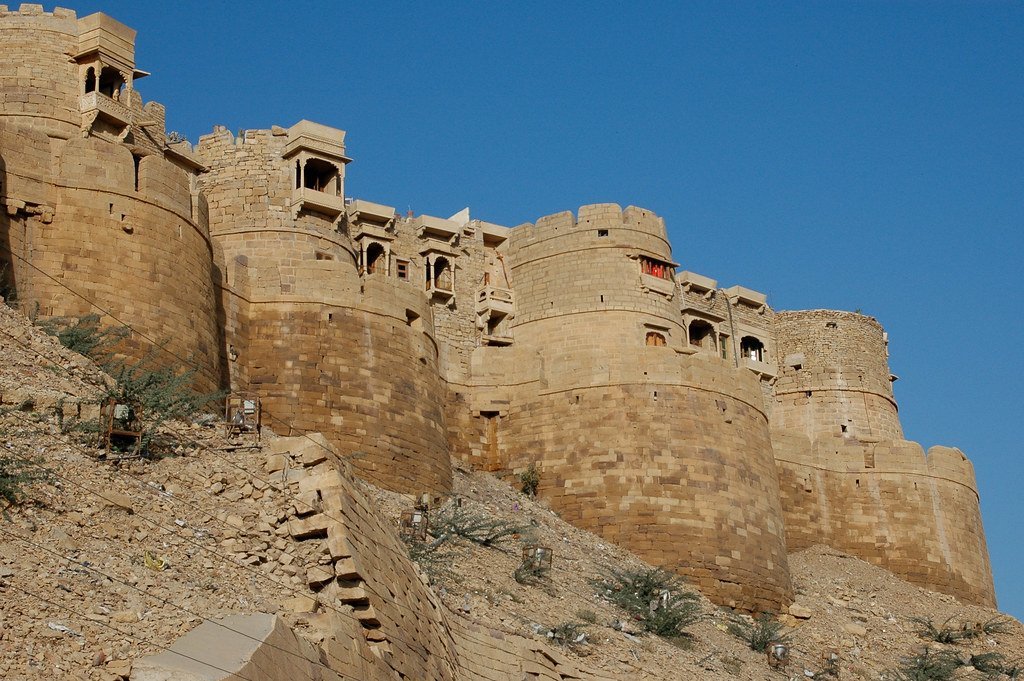
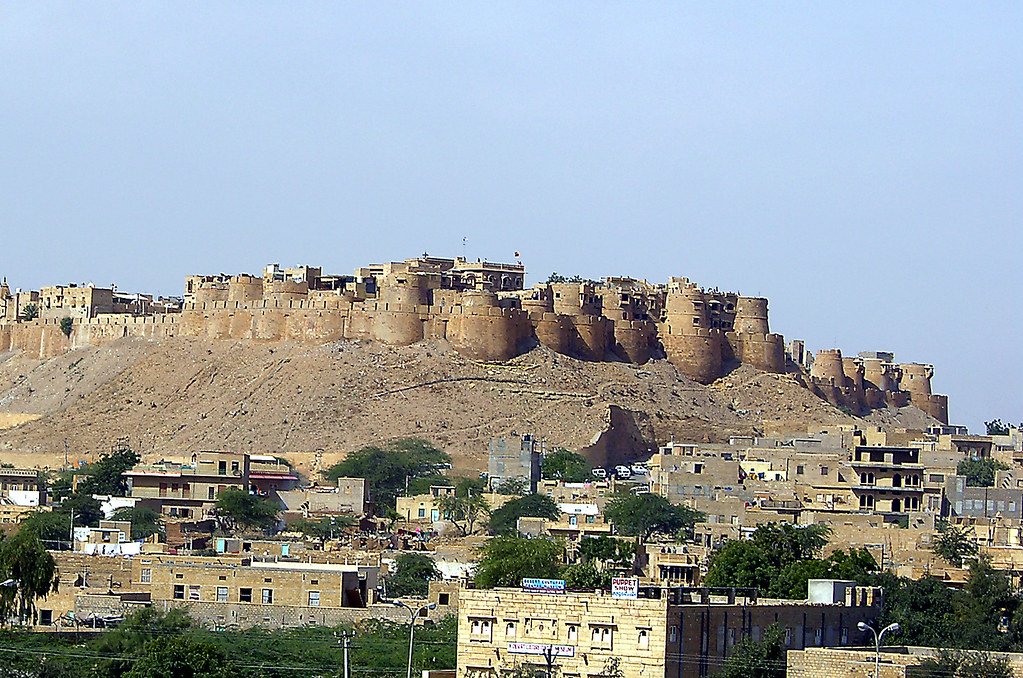
A twelfth-century sandstone fort with 99 bastions, and still a living town. Inside are the royal palace, seven carved Jain temples and lanes of homes and shops. Best explored in the morning.
The Golden City of the Thar Desert: a living sandstone fort, lace-carved havelis, and nights under the stars among the dunes.
Jaisalmer is a desert city in far western Rajasthan, founded in 1156 by Rawal Jaisal and built almost entirely of golden-yellow sandstone. Its hilltop fort is one of the few 'living forts' in the world, still home to thousands of people, and a UNESCO World Heritage Site. Jaisalmer is about 285 km (5 hours) from Jodhpur, with seasonal flights from Delhi. It is the westernmost point of most Rajasthan journeys, and travellers usually stay two nights, often one of them in the dunes.
Jaisalmer rises out of the Thar like a mirage. The walls of its fort, Sonar Quila, glow honey-gold at sunset. Inside, the fort is not a museum. Families still live in its lanes, alongside Jain temples, small hotels and shops, just as they have for more than eight centuries.
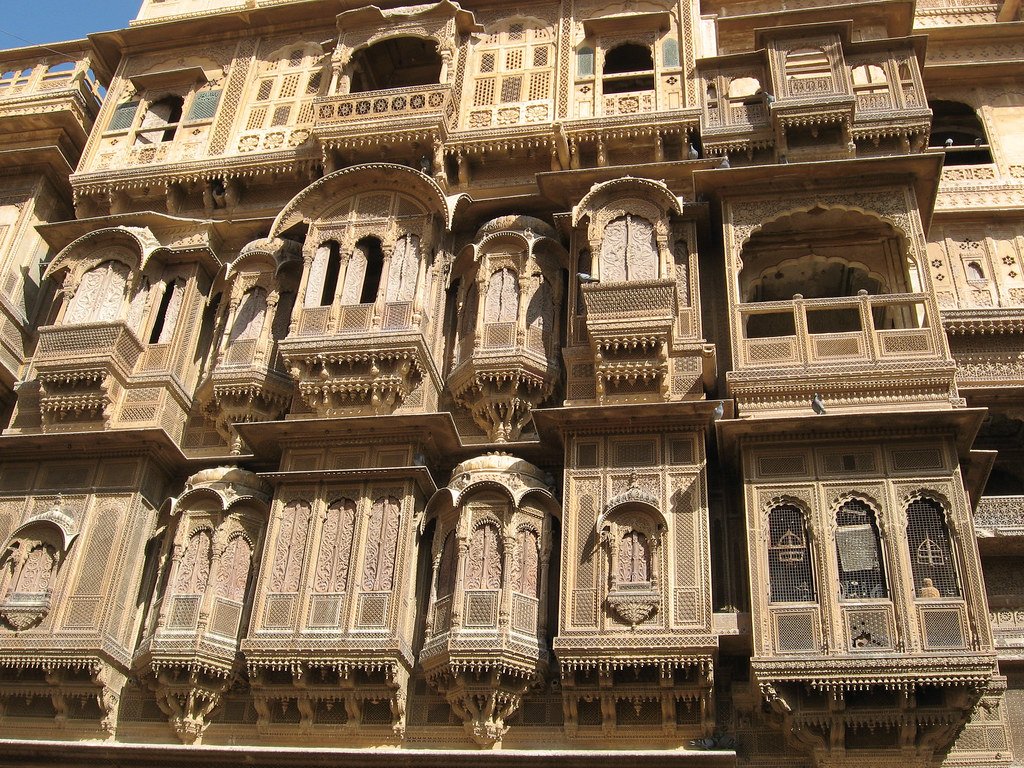
This was once a rich caravan town on the camel routes to Persia and Arabia, and its merchants spent their fortunes in stone. The havelis of the old city, Patwon ki Haveli above all, are carved so finely that the sandstone looks like lace. Your guide walks you through them and down to the royal cenotaphs and the quiet waters of Gadisar Lake.
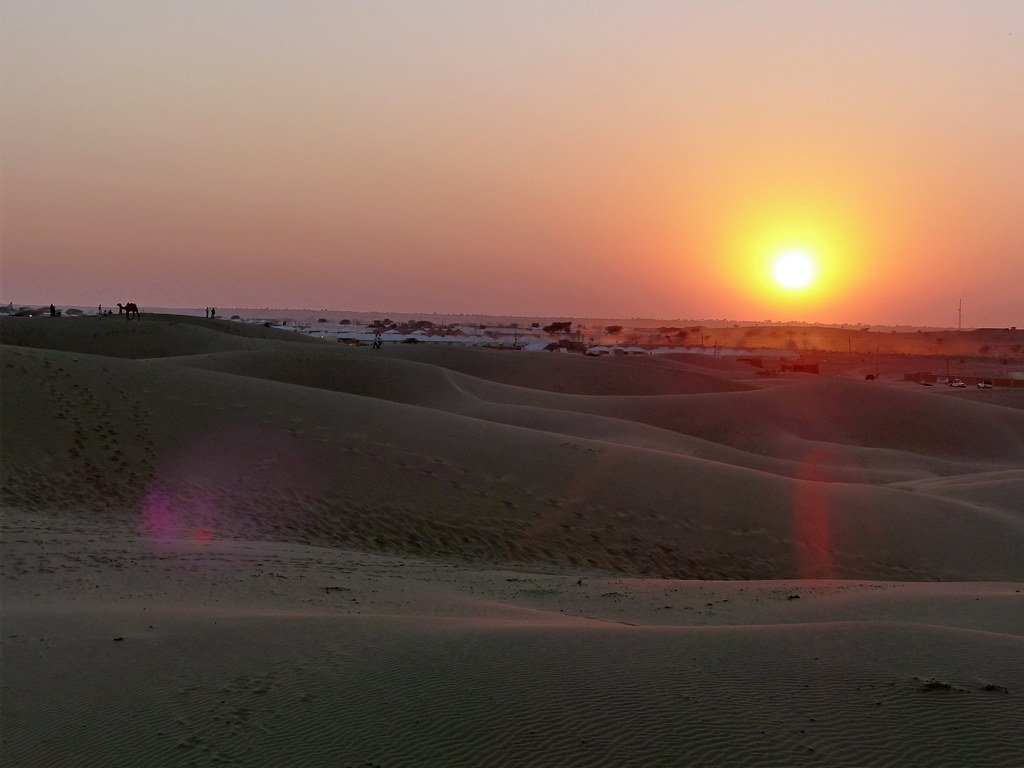
Then the desert. In the late afternoon we drive out to the dunes for sunset, on a camel if you wish. You can return to town, or stay out at a well-run desert camp with dinner, folk music and a sky full of stars.
A twelfth-century sandstone fort with 99 bastions, and still a living town. Inside are the royal palace, seven carved Jain temples and lanes of homes and shops. Best explored in the morning.
A cluster of five mansions built in the early 1800s by a wealthy brocade merchant, with carved balconies and screens that are the finest in Jaisalmer. Nathmal and Salim Singh havelis are close by.
Rolling dunes about 40 km from the city, for sunset camel rides and desert camps. We choose quieter dunes and well-run camps, away from the crowds.
A fourteenth-century reservoir ringed by shrines, ghats and a carved stone gateway. It is peaceful at dawn, when the fort glows across the water and birds gather on the lake.
Rows of carved sandstone chhatris, memorials to the rulers of Jaisalmer, on a low ridge outside the city. Stark and beautiful, especially in the late afternoon light.
A village of the Paliwal Brahmins, mysteriously abandoned about two centuries ago and wrapped in local legend. Its empty stone houses make an atmospheric stop on the way to the dunes.
October to March, when desert days are warm and nights are cool, and cold in December and January. The Desert Festival, held around the February full moon, fills the city with music, camels and colour.
Two nights: one day for the fort and havelis, and one afternoon and evening in the dunes. Many travellers spend one of the nights at a desert camp.
Camps vary widely. We use a small number of well-run camps with proper tents and bathrooms, and we avoid the loud, crowded ones near the main dunes.
Drive from Jodhpur in about five hours, or take a seasonal flight from Delhi. Because Jaisalmer is remote, we usually plan it as a Jodhpur–Jaisalmer loop.
Yes, if you have the time. Jaisalmer's living sandstone fort, carved havelis and the Thar Desert dunes are unlike anywhere else in India. It is remote, about five hours beyond Jodhpur, so it suits journeys of 12 days or more.
Most travellers drive from Jodhpur, about 285 km or five hours. Jaisalmer also has an airport with seasonal flights from Delhi and a few other cities, and overnight trains connect it with Delhi and Jaipur.
Two nights is ideal. That gives you one day for Jaisalmer Fort, its Jain temples and the havelis, and an afternoon and evening in the Sam dunes, with the option of a night at a desert camp.
The whole city, including its fort, havelis and houses, is built from local yellow sandstone that turns golden in the sun. At sunset the fort glows, which is why Jaisalmer is known as the Golden City and its fort as Sonar Quila, the Golden Fort.
Tell us your dates and we'll plan your Jaisalmer days, with the fort before the heat, the havelis with a guide, and a sunset in the dunes with a night at a camp we trust, as part of your private Rajasthan journey.